







St James would probably have been the sort of bishop every parish priest secretly feared, and every parish committee chair politely avoided.
Need someone to keep the peace? Perhaps not James.
Need someone to suggest the most measured response to rejection? Definitely not James.
When a Samaritan village refused to welcome Jesus, James and his brother John did not propose dialogue, pastoral accompaniment or another route. They simply asked, “Lord, do you want us to command fire to come down from heaven and consume them?” (Luke 9:54). I admit that, considering the present poor state of affairs in the Church, I occasionally find myself sympathising with their instincts, though Samson’s jawbone of an ass seems more appealing.
But one could almost imagine the other apostles quietly taking a cautious step backwards while Jesus sighed with the patient love reserved for those whose zeal had not yet learned mercy.
Nor was this an isolated incident. John could not tolerate someone casting out demons in Jesus’ name simply because he was not part of their group (Luke 9:49). Later, James and John approached the Lord with astonishing confidence to reserve the best seats in the Kingdom before anyone else could ask (Mark 10:35-41). They were ambitious, impulsive and wonderfully uncomplicated. Their hearts burned with love for Christ, but the fire still needed to be purified.
It is little wonder that Jesus called them Boanerges, “Sons of Thunder.”
Yet Christ never sought to extinguish their thunder. He transformed it.
The thunder that once wished to call down fire upon sinners would one day proclaim the fire of the Holy Spirit. The passion that once sought earthly glory would become a courageous witness. James did not lose his zeal. Grace redirected this son of thunder to becoming a thunder for God.
It is no coincidence that the same apostle who once wanted to summon heavenly fire would later write some of the most searching words in all of Sacred Scripture.
“Faith by itself, if it has no works, is dead” (James 2:17).
At first hearing, these words can sound severe. They have unsettled Christians for centuries. Yet James is not diminishing faith. Rather, he is defending its true nature.
Faith is never merely the acceptance of religious propositions. Even the demons, James reminds us with striking irony, believe that God is one, and they tremble (James 2:19). Mere intellectual assent is not yet the faith that saves. Authentic faith is an encounter with the living God. It draws the whole person into communion with Christ and necessarily reshapes the manner of living.
St Thomas Aquinas reminds us that faith without works is unformed or lifeless faith (fides informis), but faith along with works is formed faith (fides formata). Therefore, our faith and works (charity) must always go hand in hand. They form an inseparable relationship.
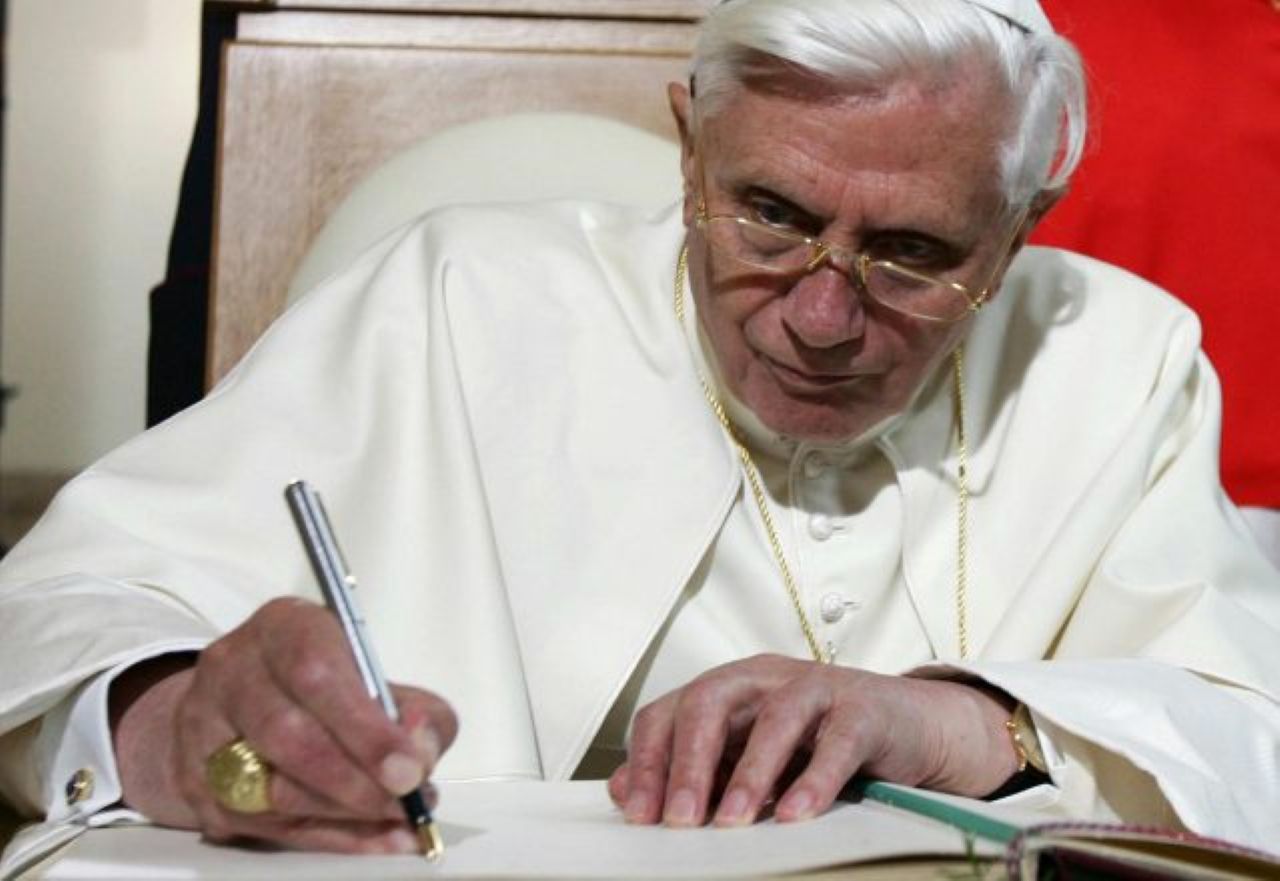
Pope Benedict XVI frequently reminded us that Christianity begins not with an ethical programme but with an encounter with a Person. That encounter changes everything. If Christ truly enters the heart, He cannot remain confined there. His presence radiates outward into thought, speech and action. Faith becomes visible because Christ Himself becomes visible.
This is precisely what James wishes to teach.
Works are not competitors to faith. They are its manifestation.
A healthy tree bears fruit because it is alive. The fruit does not give life to the tree, but it reveals that life is already present. Likewise, works of charity, forgiveness, patience and sacrifice do not replace faith. They reveal that faith is living.
One might compare faith to the flame of a candle.
A candle hidden beneath an opaque jar gives neither light nor warmth. One may insist that the flame exists, but if its light reaches no one, something is gravely amiss. Genuine faith cannot remain concealed, because by its very nature it illuminates. It gives warmth, and ultimately it gives itself away.
As Christians, the Letter of James calls us to examine not merely what we profess but what we embody.
Do my words reveal Christ?
Does my patience reflect His patience?
Does my generosity bear witness to His generosity?
Does my forgiveness echo the forgiveness I myself have received?
These questions are not invitations to anxiety but to authenticity.
The saints never regarded good works as spiritual achievements by which they earned God’s favour. Rather, they recognised them as the overflowing abundance of grace already received. Love naturally desires expression. A child embraced by a loving father instinctively embraces in return. So too the Christian who has encountered the mercy of Christ cannot help but become merciful.
James himself is living proof of this mystery
The impatient apostle became the first among the Twelve to seal his witness with martyrdom. The ambitious disciple who once sought a glorious throne beside Christ accepted death by a sword, and that too without any preconditions. His life had become entirely conformed to the One whom he had first followed so imperfectly.
The thunder remained, but now it echoed the Gospel.
One suspects that if the James of Luke chapter nine had met the James who later wrote his epistle, the younger man might have received quite a stern lecture.
“James,” the older apostle may well have said, “before asking whether heaven should rain down fire on your enemies, perhaps ask whether your neighbour has had supper.”
For this is exactly the point of his letter. It is remarkably practical. James has little patience for a Christianity that speaks eloquently about God while quietly stepping over the hungry, the lonely or the forgotten. One can almost hear the old Son of Thunder still speaking with unmistakable force. Only now, the lightning is directed not at the Samaritans but at our excuses.
Perhaps that explains why his epistle can leave us feeling wonderfully uncomfortable. We are often delighted to profess our faith. We are rather less enthusiastic when that profession interrupts our comfort. It is much easier to promise the world our prayers than to surrender an afternoon helping someone move house. We readily assure people that God loves them. We become strangely busy when they ask us to help paint the parish hall.
James would probably smile knowingly.
After all, this is the apostle who once imagined that greatness consisted in sitting beside Christ. He eventually discovered that true greatness consisted in following Him, even when the road led to Calvary rather than to the front row.
Perhaps heaven itself smiles whenever James sees us trying to negotiate with the Gospel
“Lord, I believe.”
“Excellent,” James replies.
“And I attend Mass every Sunday.”
“Very good.”
“I even listen to the homily.”
“Splendid.”
“And now?”
“Now,” James says with a twinkle, “go and do something about it.”
Perhaps that is the deepest lesson of today’s feast. God does not ask us to become different people by our own strength. He asks us to surrender ourselves so completely that His grace transforms everything we already are. He does not erase our temperament. He sanctifies it. He does not suppress our passions. He purifies them until they become instruments of His love.
Faith, then, is never an invisible possession tucked safely within the privacy of the heart. It seeks hands that serve, feet that walk beside the suffering, lips that speak truth, and hearts that forgive.
For faith that remains alone eventually dies.
But faith that flowers into love already shares in the life of heaven.