




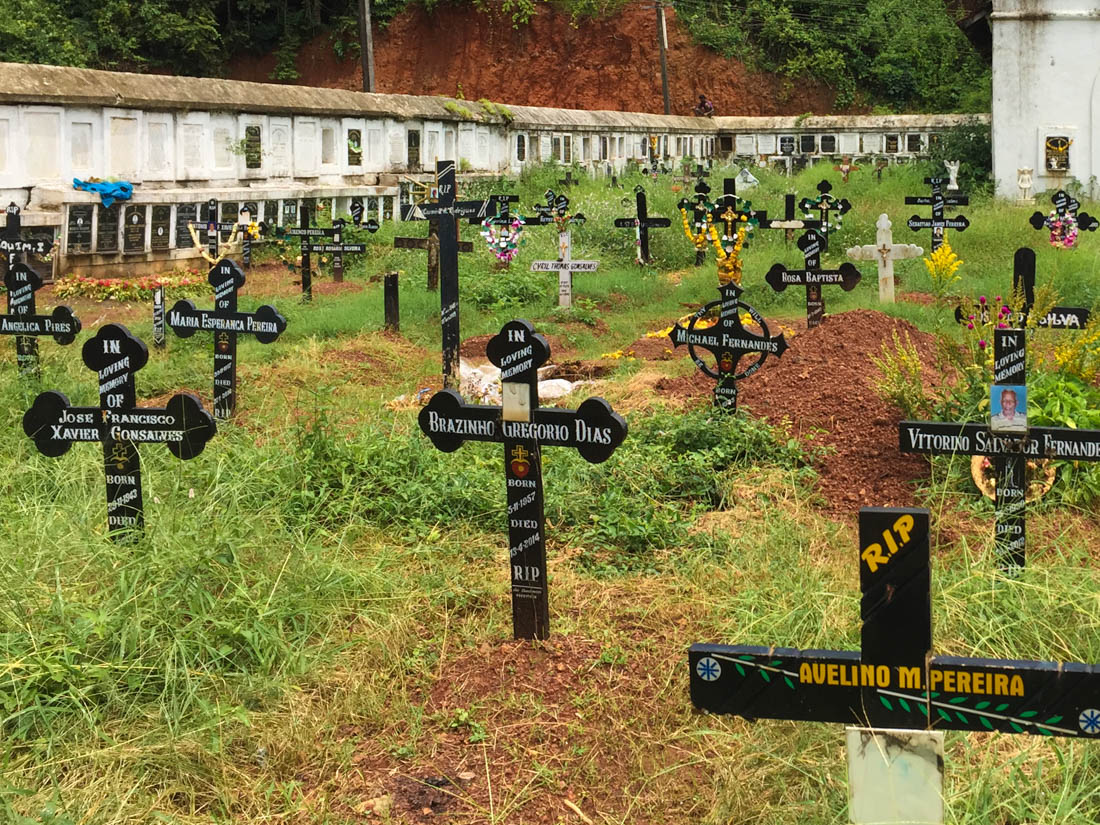
There are moments in every life when the thought of one’s own death ceases to be an abstraction and becomes intensely personal. The silence of a hospital corridor, the tolling of a bell at dusk, the sudden passing of a friend—these events strip away illusion. Death stands before us not as a philosophical concept but as a question addressed to the heart: What becomes of me?
In Goa, when an elderly aunty reaches ninety and still insists on supervising everyone’s business from the balcony, someone will inevitably say, “Hanv mhaka dista, she’s not going anywhere. Even St Peter is tired of waiting.” It is humour—but beneath it lies a gentle theological instinct: life is a gift, but it is not indefinite. And we all know it.
From a Catholic perspective, this question is not met with evasion, nor with stoic resignation, but with a Person. Christianity does not offer a theory about death; it offers the crucified and risen Lord, Jesus Christ.
Death as the Unveiling of Truth
In modern culture, death is often concealed—medicalised, sanitised, and pushed to the margins. We speak of “passing away,” as though we have simply gone to Margao for the weekend. Death is treated as a scheduling inconvenience rather than a metaphysical encounter.
Yet Sacred Scripture speaks with sober clarity: “It is appointed for men to die once, and after that comes judgment” (Heb 9:27). Death is not annihilation, nor is it a mere biological event. It is the moment in which the truth of our life stands unveiled before God.
Here lies the drama: man is created for communion, yet marked by sin. Death entered the world through the rupture of that communion. And yet—this is the decisive Christian claim—death has been transformed from within.
On the Cross, Jesus Christ descended into the deepest solitude of human existence. He entered that place where man feels utterly forsaken. “My God, my God, why have you forsaken me?” In doing so, He made even abandonment a place of encounter. There is no human darkness into which He has not gone before us. Thus, death is no longer an uncharted abyss; it has become a passage marked by His footprints.
Why We Fear (And Why We Joke)
Let us admit it: we fear death because we fear losing control. As Goans, for all our relaxed charm, are not exempt. We will plan a wedding down to the last pint of cashew feni (relax- not all Goans are drunks)—but the hour of our own death? That is not in our diary. Debate for three evenings about whether the band should play one more mando,
but the hour of our own death? That appointment is mysteriously absent from Google Calendar.
Death, however, does not consult our event planner. And perhaps that is precisely why it unsettles us: it is the one moment when we are not the master of ceremonies.
And let us be honest, no one ever says casually, “I must drop in and see the undertaker.” The poor person has the only business in town, where the slogan could be, “People are simply dying to use our services.” You never make an appointment in advance; you just… drop in when you drop dead.
The Christian Art of Dying
The tradition speaks of the ars moriendi—the art of dying well. This art is not morbid preoccupation, but a manner of living. To prepare for death is to learn daily detachment: to surrender pride, to forgive offences, to seek reconciliation. In truth, every act of repentance is a small rehearsal for that final entrustment.
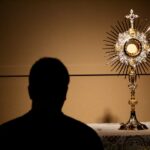
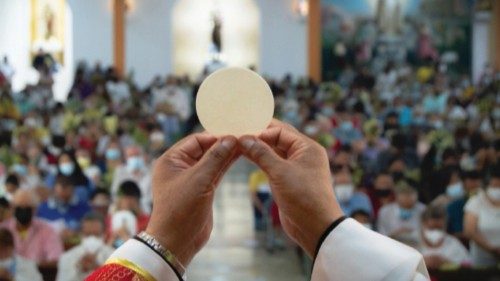
The saints teach us that fear of death is often fear of losing control. Yet the Christian life is precisely a school of trust. In Baptism, we were plunged into Christ’s death so as to rise with Him (cf. Rom 6:3–5). The sacramental life, especially the Eucharist, is a continual participation in the Paschal Mystery. Each Communion whispers to the soul: You are destined for eternity.
To live Eucharistically is to live with one foot already in heaven.
Why We Need Not Be Afraid
Fear of death is deeply human. Even the Lord Himself trembled in Gethsemane. Christianity does not deny this trembling; it transfigures it. The Resurrection is not a mythic symbol but a historical irruption. The empty tomb is the pledge that death does not have the final word.
The risen Christ does not abolish our individuality; He perfects it. Eternal life is not the dissolution of the self into a cosmic anonymity. It is the fulfilment of personal communion—face to face with God, yet without ceasing to be ourselves.
In this light, death appears not as extinction but as homecoming. The Catechism speaks of it as the “end of earthly pilgrimage.” Pilgrimage implies destination. The heart of man is restless until it rests in God. Death, for the one who has learned to love, is the threshold of that rest.
The Judgment of Love
We must also speak of judgment, for love demands truth. The encounter with God is not arbitrary scrutiny but the blazing revelation of Love Himself. In that light, all falsehood burns away. For some, this purification may be painful; yet it is the pain of healing, not of condemnation.
The Christian does not deny the seriousness of this hour. Rather, he entrusts himself to Divine Mercy. The One who judges is the same One who died for us. The pierced Heart is our advocate.
Living Towards the Horizon
To reflect on personal death is not to withdraw from life; it is to live more intensely. When eternity is real, triviality loses its charm. Love becomes urgent. Forgiveness becomes necessary. Hope becomes rational.
In the end, the Christian can whisper with serene confidence: Into your hands, O Lord, I commend my spirit. This is not bravado. It is filial trust.
We should not be afraid to die because we are not going into nothingness. We are going toward Someone. The final word over human existence is not silence, but a Name spoken in love.
And when that Name is spoken, we shall discover that death was not the collapse of meaning, but its consummation, the moment when faith yields to sight, and hope to possession, and love alone remains.