

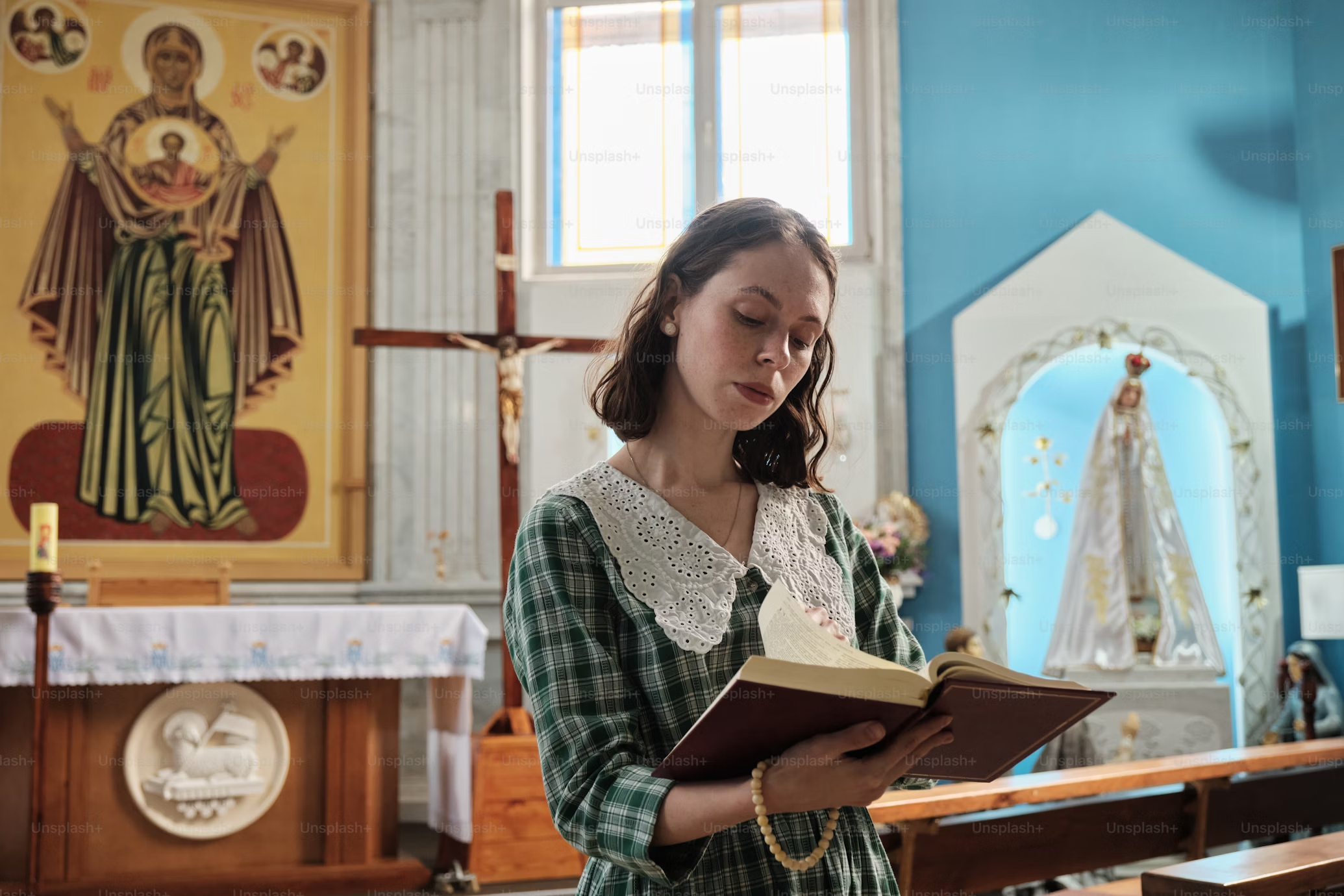





Each year, the Church celebrates the third Sunday of ordinary time as the Word of God Sunday, reminding us that Scripture is not a peripheral devotion but the living heart of Christian faith. The celebration also asks a quiet question of each believer: Where does the Word dwell during the rest of the year?
To celebrate the Word is not merely to hear it proclaimed but to allow it to take up residence within us. The Word of God is meant not only to be listened to on the ambo but also to be carried in the heart, remembered in prayer, and lived in the ordinary rhythms of life. This is the mystery of indwelling—the Word becoming a home within us.
The Word That Dwells in Us
Saint Paul urges the Colossians, “Let the word of Christ dwell in you richly” (Col 3:16). The verb is striking: the Word is not meant to visit us occasionally, like a guest, but to dwell—to remain, to shape the inner architecture of our lives. Yet this indwelling is never a solitary experience. The Word that takes root in the believer’s heart is the same Word entrusted to the Church.
The Catholic interpretation of Scripture is therefore not a limitation imposed upon the Word, but the very space in which the Word is allowed to be fully itself. As Verbum Domini teaches, the Word of God is entrusted to the living subject of the Church, where Scripture, Tradition, and Magisterium form a single sacred symphony. Read within this communion, the Word does not collapse into private opinion or personal projection but remains the living voice of Christ speaking in His Body.
Guided by the same Spirit who inspired the Scriptures, the Church listens before she speaks, receives before she interprets. Thus the Word becomes at once deeply personal and irreducibly ecclesial: it addresses the heart of the believer while shaping the faith of the whole Church. In this way, Scripture forms not only individual disciples, but the mind of Christ living and breathing within His people.
Lectio Divina: The Pathway to Relationship
Lectio divina—sacred reading—is the Church’s ancient way of entering into this living relationship with the Word. It is not a technique, but rather a posture of the heart. Unlike hurried reading or purely analytical study (both valuable in their place), lectio is slow, receptive, and relational.
Traditionally, it unfolds in four movements:
- Lectio (Reading): We listen to the Word as it is, without forcing meaning. The text sets the pace. We receive, not grasp.
- Meditatio (Meditation): A word or phrase begins to shimmer. We hold it gently, allowing it to descend from the mind into the heart.
- Oratio (Prayer): The Word awakens a response—petition, repentance, praise, or silence. We speak because He has spoken first.
- Contemplatio (Contemplation): Words fall away. What remains is presence. We rest in the God who has drawn near through His Word.
Through this rhythm, Scripture ceases to be a distant text and becomes a living voice. Fidelity matters more than quantity. Returning daily to the Word slowly shapes the soul into a place of listening.
When the Word Begins to Read Us
One of the great graces of lectio divina is the moment we realise that we are no longer simply reading Scripture—Scripture is reading us. The Word illuminates hidden fears, purifies our motives, and gently reorders our lives. It becomes a mirror and a fire, revealing and transforming at the same time.
This is why lectio is never neutral. To remain with the Word is to be changed by it.
From the Word Proclaimed to the Word Consumed
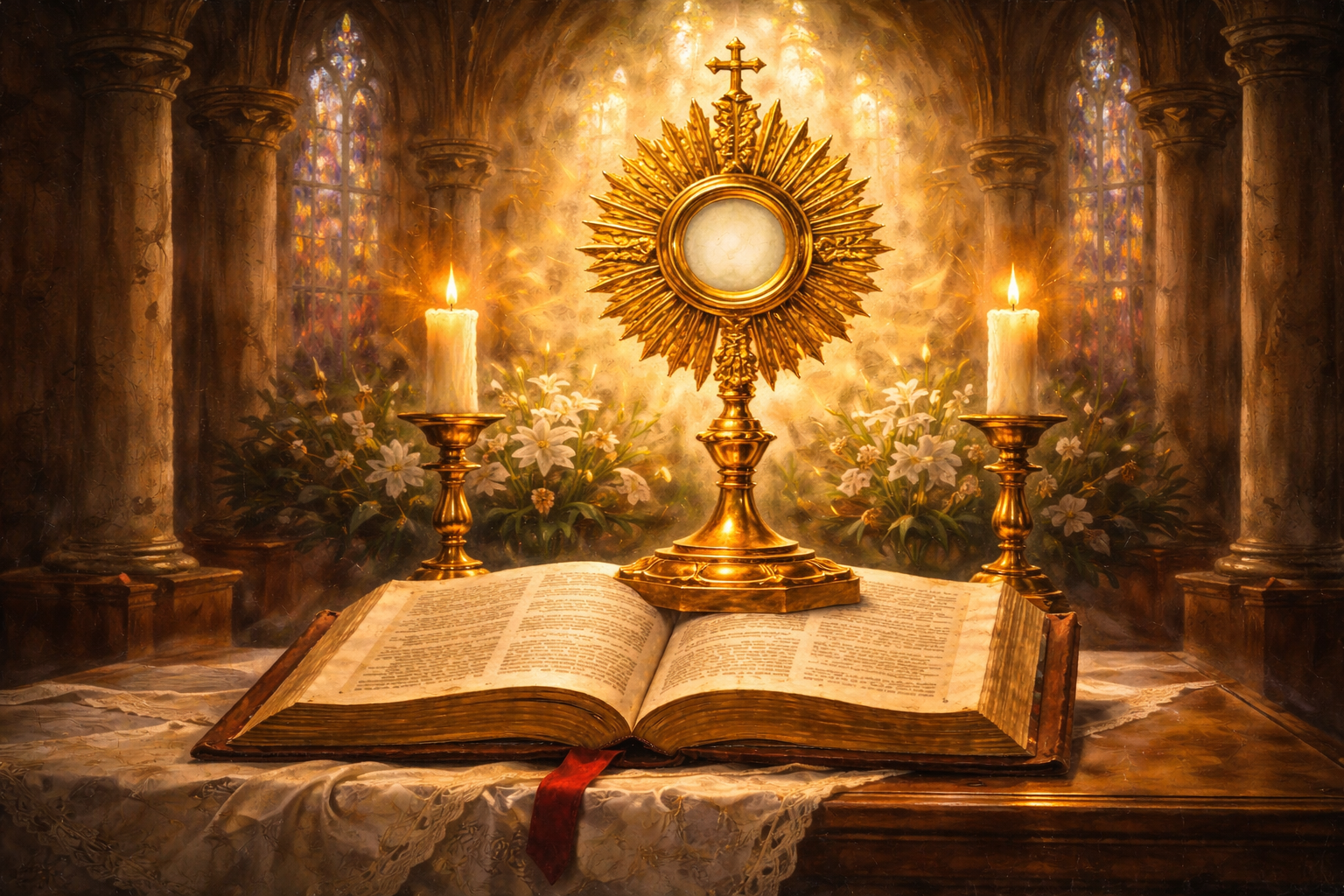
Yet the journey of the Word does not end on the page. In the liturgy, the Church moves deliberately from the Liturgy of the Word to the Liturgy of the Eucharist, because the same Christ who speaks is the Christ who gives Himself as bread. The Word we receive with the ear is the same Word we receive with our mouths.
Here, the deepest dimension of in-dwelling is revealed: the Word does not only dwell in us through Scripture; He consumes us from within with His Body and Blood. What began as listening becomes a sacred relationship.
When lectio divina forms our hearts, the Eucharist finds fertile ground. The Word we have chewed in prayer becomes the Body and Blood we receive in faith. The Christ we have heard in silence now enters us entirely, drawing our whole life into His self-giving love.
In this sacred rhythm—Word proclaimed, Word prayed, Word consumed—the Christian life is formed. And slowly, quietly, we discover that the Word was never meant merely to be understood, but to become our dwelling place.