




Every priest knows that there are certain Sundays which inspire confidence in the pulpit. Christmas and Easter practically preach themselves. Trinity Sunday, however, often provokes a different reaction. One preacher famously remarked that preparing a homily on the Holy Trinity feels rather like trying to explain the ocean to a goldfish. Another quipped that every sermon on the Trinity ends either in confusion or heresy. The humour contains a grain of truth. The mystery of the Trinity is not a puzzle to be solved but a divine reality into which we are invited. It is a mystery that must never be unravelled because it is infinitely greater than the human mind.
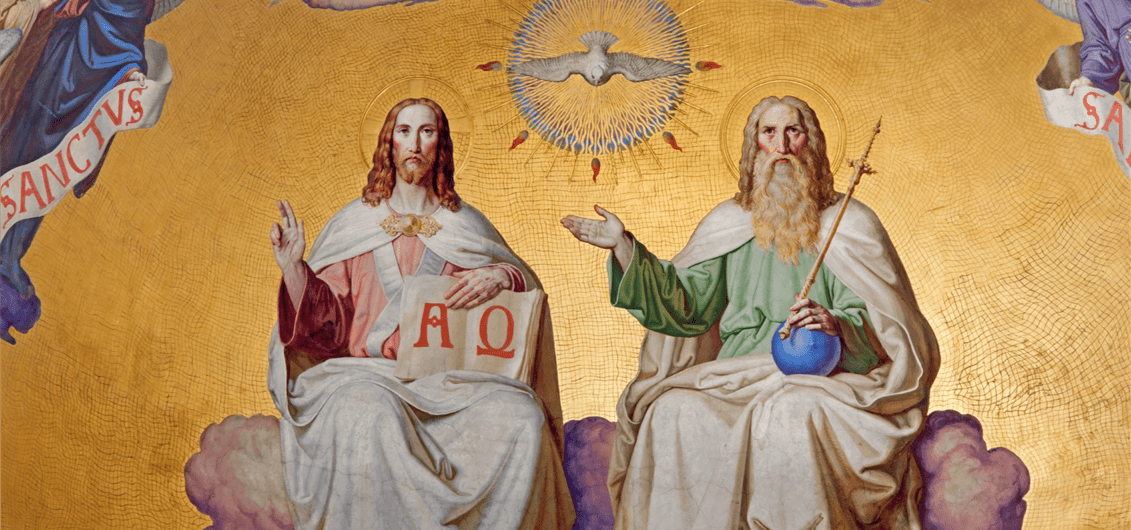
Yet the Church does not celebrate Trinity Sunday merely to remind us that God is mysterious. She celebrates it because the deepest truth about God is that He is Love. The Father eternally gives Himself to the Son. The Son eternally receives and returns that love to the Father. The Holy Spirit is the eternal communion of love proceeding from the Father and the Son. God is not solitary. God is an eternal communion of self-giving love.
The wonder of the Christian faith is that we are not spectators of this divine love. Through Christ and in the Holy Spirit, we are drawn into it. Salvation is not simply the forgiveness of sins, important though that is. Salvation is participation in the very life of the Blessed Trinity.
The sacraments are the privileged means by which this participation becomes a living reality. Through Baptism, we are plunged into the life of the Father, and of the Son, and of the Holy Spirit. We are not merely enrolled into a religious community. We are adopted into the household of God. The Holy Spirit comes to dwell within us and makes us children of the Father in the Son.
This Trinitarian character of Christian life becomes visible every time we gather for Mass. The liturgy begins with words so familiar that we often fail to notice their profound significance. The priest makes the Sign of the Cross and says: “In the name of the Father, and of the Son, and of the Holy Spirit.” The Mass begins by reminding us who God is and who we have become through Baptism. We approach the altar not as isolated individuals but as sons and daughters invited into the communion of the Triune God.
The greeting that follows deepens this reality: “The grace of our Lord Jesus Christ, and the love of God, and the communion of the Holy Spirit be with you all.” These words, drawn from Saint Paul, are not merely a polite welcome. They are a proclamation of the entire Christian mystery. The grace of Christ, the love of the Father, and the fellowship of the Holy Spirit are being offered anew to the Church gathered in worship.
Through Christ and in the power of the Holy Spirit, we are being welcomed into the very communion of love that exists eternally between the Father and the Son. The grace of Christ, the love of the Father, and the fellowship of the Holy Spirit are not abstract gifts bestowed from afar. It is an invitation to participate in the intimate life of the Trinity itself. Through this proclamation, the Church reminds us that we are called to share in that eternal exchange of love, to be drawn ever more deeply into the divine communion which is the source, the meaning, and the destiny for every human life. This invitation reaches its fullest sacramental expression in the Eucharist.
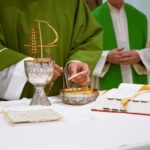
The Eucharist is the supreme sacrament of this communion. Here Christ gives Himself entirely to His people. Through the power of the Holy Spirit, bread and wine become His Body and Blood. In receiving Holy Communion, we are united more deeply to Christ and, through Him, brought into the eternal love that flows between the Father, Son, and Holy Spirit. The Eucharist is therefore not simply a remembrance of Christ. It is an entry into the living communion of the Trinity.
Perhaps one of the most fruitful ways to celebrate Trinity Sunday is to revisit our baptismal promises. At Baptism, we renounced sin and professed faith in the Father, the Son, and the Holy Spirit. Those promises reveal our true identity. They remind us that our lives have been marked forever by the name of the Triune God.
It may also be worthwhile to spend a few moments meditating on the introductory rites of the Mass. The words are brief, yet they contain an entire theology of divine love. Every Mass begins by drawing us back to our baptismal identity and reminding us that we have been claimed in the name of the Father, and of the Son, and of the Holy Spirit. More profoundly still, the liturgy reveals that we are not merely approaching God from a distance.
The mystery of the Trinity remains inexhaustible. No sermon, no theology, and no human language can fully comprehend it. Yet the purpose of the mystery is not to frustrate us. It is to draw us. The Father, through the Son, in the Holy Spirit, continually draws humanity into His eternal and perfect communion of love. Trinity Sunday reminds us that the heart of reality is the love of the Father, the Son, and the Holy Spirit, a love into which we have already been welcomed and which will one day be our everlasting joy.