






The Hidden Consolation of Divine Love
There are moments in the spiritual life when the human heart enters a profound interior obscurity. Prayer appears barren, the soul feels abandoned, and the nearness of God, once perceived with sweetness and clarity, seems veiled in silence. The saints, particularly the great mystics of the Church, have often described this painful passage as the “dark night of the soul”. Yet as Christians, we must never interpret this darkness as the absence of God. Very often, it is precisely within such nights that the Holy Spirit is at work most deeply and most intimately.
In today’s world, many often equate the divine presence with emotional consolation. When peace is felt, God is believed to be near; when dryness descends, He is imagined to have withdrawn. Yet the mystery of faith reveals something far greater than the fluctuations of human emotion; the Holy Spirit does not cease His action simply because sensible consolations are withdrawn. Rather, He purifies the soul, leading it from a faith dependent upon feelings into a faith rooted more profoundly in love and truth.
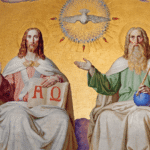
We ought to remember with renewed seriousness what occurs at baptism. The sacrament is not merely a symbolic rite of belonging within a religious community. Through baptism, the human person is drawn into the very life of the Most Holy Trinity. The Father adopts the soul as His child, the Son unites us to His Mystical Body, and the Holy Spirit comes to dwell within the depths of the human heart. We become living temples of God. This grace is deepened and strengthened in Confirmation, where the Holy Spirit is bestowed in a fuller outpouring for the strengthening of Christian witness and perseverance.
This indwelling of the Holy Spirit establishes an enduring and irrevocable bond between the Triune God and us. Even when the soul passes through darkness, confusion, or suffering, this bond remains untouched. The Holy Spirit does not abandon the baptised soul in moments of trial. On the contrary, He remains present with a fidelity far greater than human constancy.
The Church has long contemplated the Holy Spirit as the eternal Love shared between the Father and the Son. In the mystery of the Trinity, the Spirit is not merely a force or influence but the living communion of divine love itself. Consequently, when the Holy Spirit is poured into the human heart, the Christian is drawn into the very circulation of love that exists eternally within God.
Such a truth reveals the immense dignity of the baptised person. Even amidst weakness and suffering, the Christian remains embraced within the life of divine charity. The soul belongs not to isolation or despair, but to the eternal communion of divine love.
Yet in the ”dark night’, this reality is often hidden from immediate perception. God permits our souls to experience a certain poverty so that we may learn to rely not upon emotional certainty but upon faith. Here, the Holy Spirit acts with extraordinary delicacy. He sustains the soul silently, often beneath the threshold of human awareness.
Saint Paul speaks with profound insight when he writes that “the Spirit himself intercedes for us with sighs too deep for words” (Romans 8:26). There are moments when suffering deprives man even of language. The Holy Spirit, however, continues to heal within the depths of the soul.
In this way, the Spirit reveals Himself as the true Consoler. Divine consolation is not merely the removal of suffering. Rather, it is the mysterious strength to remain united with Christ in the midst of suffering. The Holy Spirit does not always immediately dispel darkness, but He grants the soul the grace to persevere within it.
The saints understood that such “nights” possess a deeply purifying character. The soul, deprived of superficial securities, gradually learns to seek God for His own sake rather than for the consolations He gives. The Holy Spirit gently detaches the heart from dependence upon itself and leads it towards a more mature communion with God.
Thus, the darkness itself becomes, paradoxically, a place of hidden grace. Beneath the apparent silence of God, the Spirit is enlarging the soul’s capacity for divine love. What appears outwardly as abandonment may, in reality, be a profound preparation for deeper union with Christ.
For this reason, we must learn to rely profoundly upon the Holy Spirit during moments of trial. Contemporary society often encourages us to seek salvation in distraction, self-sufficiency, or emotional reassurance. Yet our lives cannot be sustained by human strength alone. The soul lives by grace, and grace is the work of the Holy Spirit within us.
To rely upon the Holy Spirit means to remain faithful even when prayer feels empty. It means to persevere in the sacraments when consolation is absent. It means to trust that God remains near even when His silence appears overwhelming. Such fidelity is not a sign of weakness but of profound spiritual maturity.
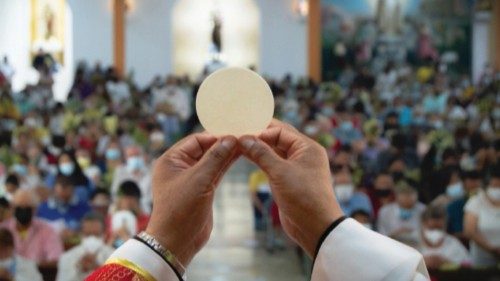
The sacraments themselves become privileged places of consolation during “dark nights”. In the Eucharist, the Holy Spirit continually draws us into communion with Christ. In Confession, the Spirit heals wounds hidden even from ourselves. In the Anointing of the Sick, He is the true love that is breathed gently into the depths of human suffering, uniting the sick with the passion, death and resurrection of Christ. In silence, He breathes peace into anxious hearts.
Above all, we must never forget the tenderness of the Holy Spirit. Divine love is never abstract. The Spirit knows every hidden wound, every fear, every silent burden carried within the heart. He accompanies the suffering soul with unwavering fidelity.
Therefore, especially in moments of spiritual trial, we must return interiorly to Pentecost. The Apostles themselves knew fear, uncertainty, and weakness as they prayed and waited behind closed doors. Yet the Holy Spirit penetrated and transformed their fear into courage and their frailty into fidelity.
Similarly, even now the Holy Spirit continues to descend quietly into the hidden “upper rooms” of the human heart, penetrating His light into darkness, His strength into weakness, and His peace into troubled souls. Thus, the Holy Spirit becomes the sweet guest of the soul while continuing his hidden work of sanctification and gradually conforming the soul ever more deeply to Christ and leading it gently back to the Father.