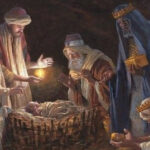






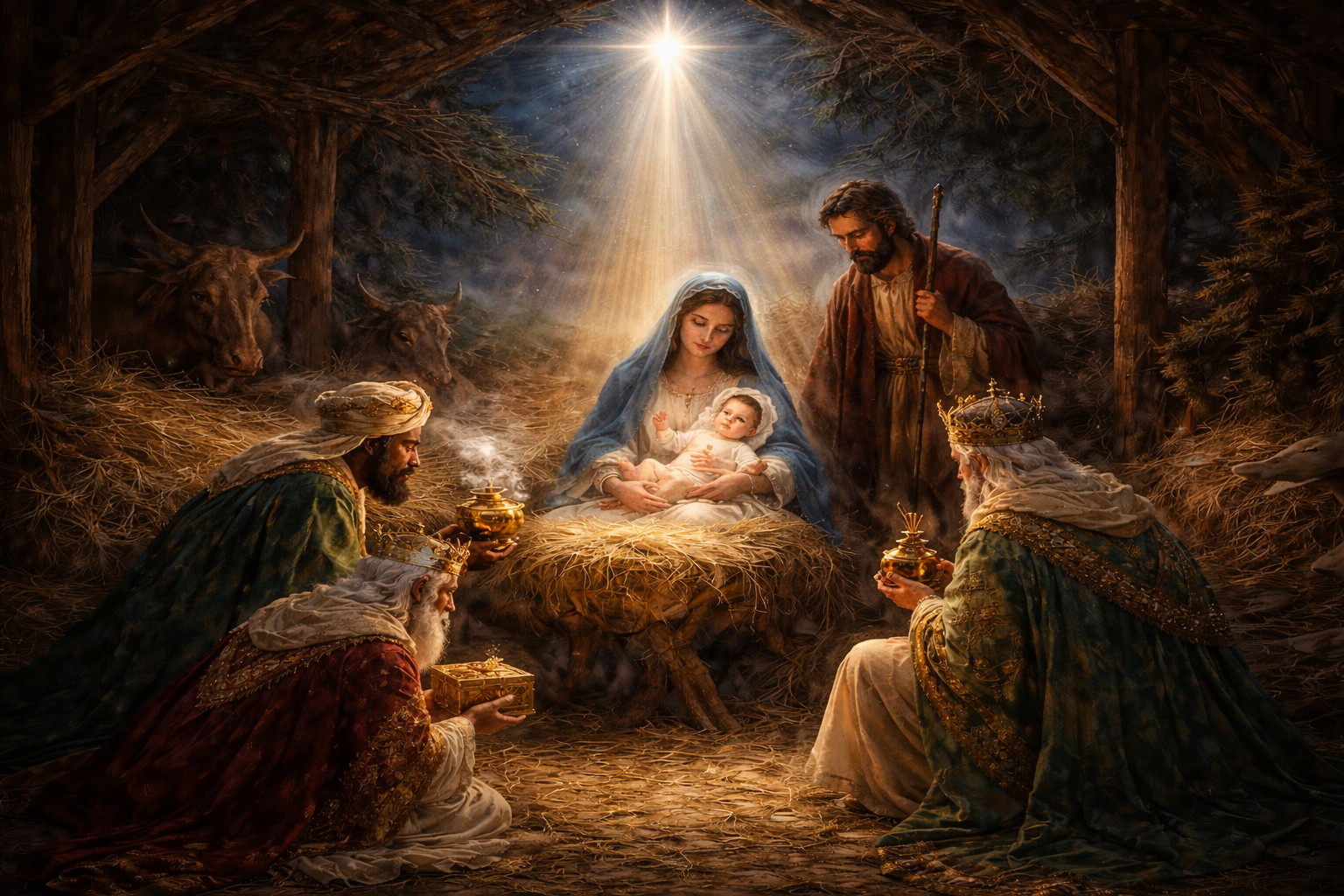
I always find the Feast of the Magi fascinating, owing to its mysterious nature of three men from the Far East drawn by the light of the star to worship the true light of the world – Jesus.
Perhaps this feast draws the Church’s gaze beyond Bethlehem to the widening horizon of salvation. The Child who lay hidden in the humility of the manger is revealed—manifested—to the nations. In the silent figures of the Magi, guided by a star and an ancient longing, the world itself approaches Christ, bearing gifts and questions, hopes and half-light. The Epiphany is thus not merely an event to be remembered, but a mystery to be entered.
The gifts the Magi offer are not accidental. They are profoundly symbolic, articulating a confession of faith before the Child himself can speak.
Gold: By placing it before an infant who possesses no earthly power, the Magi kneel and acknowledge true kingship—not imposed by force, but rooted in truth and the Spirit. Gold confesses that authority finds its fulfilment not in domination but in service. In offering gold, the Magi surrender their own calculations of power and prestige before the kingship of God made flesh.
Frankincense, rising like prayerful smoke, belongs to worship. It confesses divinity. The Magi recognise in this Child not merely a wise teacher or political hope, but God-with-us. Incense bridges earth and heaven; it signifies adoration. To offer frankincense is to acknowledge that the ultimate purpose of human life is worship—to place oneself before God in humility and trust.
Myrrh, dark and bitter, is the most unsettling gift. It speaks of suffering and death. Used for anointing bodies for burial, myrrh anticipates the Cross already at the cradle. The Magi intuit that this kingship will not bypass suffering, that this divinity will be revealed through self-giving love. In myrrh, the shadow of Good Friday falls across the joy of Christmas, reminding us that redemption is costly.
Yet the Epiphany does not end with the Magi’s gifts. It turns the question inexorably toward us. What do we offer Christ after his manifestation to our lives?
Do we offer him gold—the allegiance of our hearts, the surrender of our ambitions, the reordering of our priorities? Or do we reserve our finest treasures for ourselves, while giving God what costs us little?
Do we offer him frankincense—the worship of a life shaped by prayer, silence, and fidelity? Or has adoration been replaced by distraction, and reverence by routine?
Do we offer him myrrh—our wounds, our fears, our willingness to suffer with and for love? Or do we resist a Christ who asks us to carry the Cross rather than merely admire it from afar?
The Magi, having encountered the Child, do not return by the way they came—a detail Scripture records almost in passing, yet one that forms the quiet climax of the Epiphany.
This “other way” is not merely geographical but profoundly spiritual, because an authentic encounter with Christ reorients the entire journey of life. One cannot kneel before Truth made flesh and return unchanged to old paths of compromise, fear, or self-sufficiency.
Epiphany thus makes a searching claim: to see him is to be summoned, to adore him is to be transformed, and to offer him gifts is ultimately to offer oneself. However, this mystery does not remain confined to Bethlehem, for the same Lord who was revealed to the Magi now gives himself to us under the humble signs of bread and wine.
In the Eucharist, the Epiphany endures: Christ is revealed anew, inviting our adoration and asking not for gold alone but for the gift of our lives. May this feast not remain a beautiful memory but become a living epiphany, where, strengthened by his sacramental presence, we rise from our old way of life and, like the Magi, walk another way that draws us ever closer to him.