







On the luminous solemnity of the Annunciation, the Church once again listens to that quiet yet world-altering word spoken in Nazareth—“For nothing will be impossible with God” (Gospel of Luke 1:37). Yet today, this word does not remain confined to the distant past. It seeks to enter the hidden and often unrecognised sanctuaries of our own time—perhaps most poignantly, the life of a mother who labours alone to care for her child.
In such a life, the Annunciation is no longer merely contemplated; it is, in a certain sense, lived.
The figure of Mary stands before us not in abstraction, but in profound realism. She receives a promise that overturns every human calculation. There is no security, no visible support, no clear path forward—only a call, and the assurance that God is at work in a way that transcends understanding. Her fiat is thus not a gesture of ease, but of courage born of trust. It is a surrender into the unknown, sustained solely by confidence in the One who calls.
In this light, one begins to perceive how deeply the mystery of the Annunciation resonates with the daily life of a struggling mother whose love for her child is immeasurable. She, too, frequently finds herself in situations that appear to surpass her capabilities. The demands are unrelenting; the resources may appear insufficient; the future may at times feel uncertain, even daunting. And yet, in the midst of these realities, there unfolds a hidden drama of grace.
“For nothing will be impossible with God.” These words do not deny the weight of responsibility or the fatigue of sacrifice. Rather, they illuminate them from within. Divine omnipotence does not bypass the human condition; it enters into it. Just as God did not remove Mary from the concrete demands of her vocation, so too He does not erase the struggles of those entrusted with the care of a child. Instead, He sustains, accompanies, and quietly transforms.
Consider the sign given to Mary: Elizabeth, in her old age, has conceived. What was once deemed barren becomes fruitful. This is not merely a miracle of biology; it is a revelation of God’s fidelity. It assures us that where human capacity reaches its limit, divine grace does not falter. In the same way, the strength of a mother who perseveres—often without recognition—becomes a living testimony to this hidden fidelity of God.
Here, the meaning of omnipotence must be purified of all worldly misunderstanding. The power of God is not manifested as domination or control, but as a love that makes space, that sustains life, that brings forth goodness in the very midst of fragility. It is the power that enables a mother to rise each day, to provide, to nurture, to hope—even when hope seems unreasonable. It is the quiet strength that transforms exhaustion into offering, and duty into love.
Like Mary, she may not see how all things will unfold. She may carry questions that have no immediate answers. Yet, within her perseverance, there is already a participation in that original fiat. Each act of care, each hidden sacrifice, becomes an echo of that first “yes” spoken in Nazareth. And in this echo, the Word continues to take flesh—not in a biological sense, but in the concrete reality of love lived out in fidelity.
The Annunciation, therefore, is not simply about a singular moment in salvation history; it is about the enduring pattern of God’s action in the world. He chooses what is humble, what is overlooked, what appears insufficient, and through it accomplishes what surpasses all expectation. The life of a single mother, often lived far from the gaze of public recognition, becomes precisely such a place where the impossible is quietly rendered possible.
This feast, then, offers not a facile reassurance, but a profound invitation: to trust that God’s power is at work even when it is not immediately visible; to believe that no circumstance, however difficult, lies beyond the reach of His grace; and to recognise that in the fidelity of daily love, the miracle of the Annunciation is, in a real sense, prolonged.
For indeed, the God who overshadowed the Virgin of Nazareth continues to overshadow every act of self-giving love. And in that hidden overshadowing, the eternal truth resounds anew—not as abstraction, but as lived reality:
Nothing will be impossible with God.
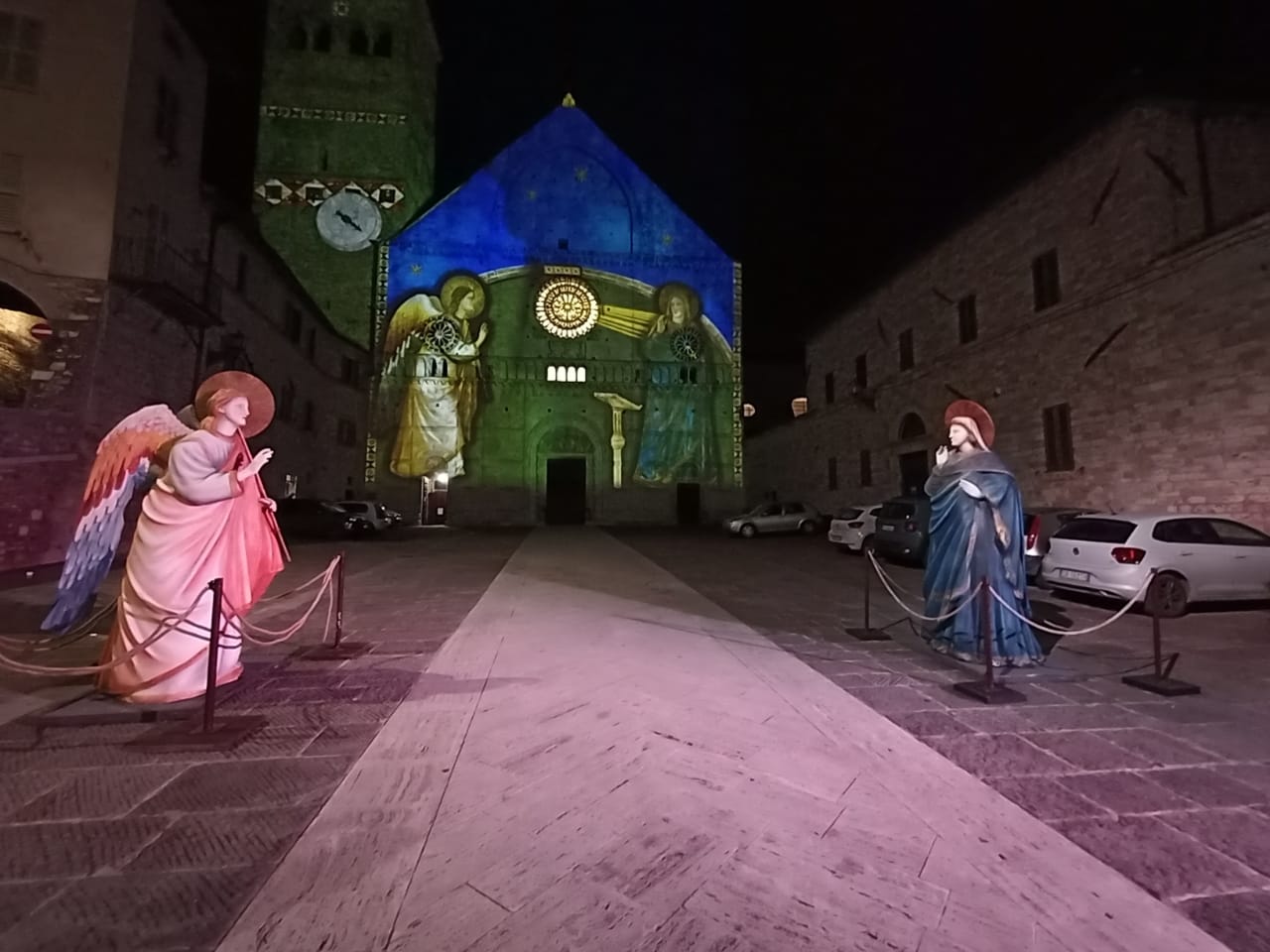
Ed note: The cover image used is of the Cathedral of St Rufino in Assisi.