





We cannot truly understand the Scriptures without first entering the mystery of the Sacrament of the Most Holy Eucharist. The Word of God does not remain confined to text or proclamation. It seeks fulfilment in a presence that is real, living, and given.
The same Christ who speaks in the Scriptures gives himself in the Eucharist. Without this sacramental key, the Word risks becoming an idea, admired yet distant. In the Eucharist, however, the Word becomes flesh for us anew, drawing us into the very life it proclaims.
In the sacred stillness of this mystery, as the Church contemplates the Last Supper, where Christ gives himself in the Eucharist, she beholds at once the immeasurable depth of divine love and the poverty of the human heart. We are drawn to recall Saint Peter in the courtyard of the high priest, warming himself by a passing, worldly fire as the night deepens and, in fear, he denies the Lord three times. That fire offers only fleeting comfort, a fragile shelter against the cold, even as Christ stands alone, exposed to accusation and the chill of rejection.
In this moment, the human drama is laid bare: we cling to the dim flames of the world, while the true fire of divine love goes unrecognised. The crowing of the cock pierces the night as a stark reminder of this truth. Yet the Eucharist draws us away from these fading fires to the One who, abandoned to the cold, becomes for us an unquenchable warmth.
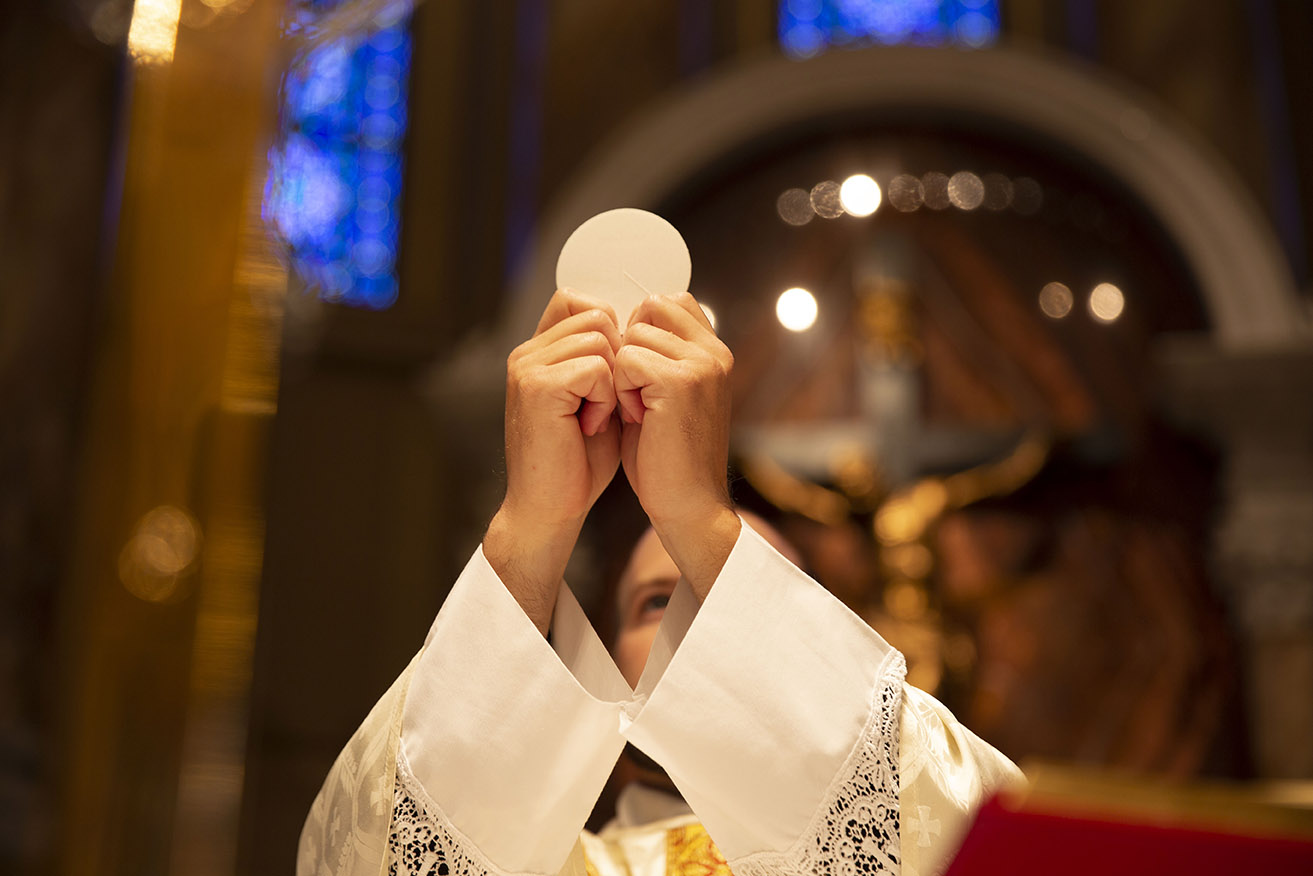
Bread is taken, blessed, and broken, and it becomes his body. Wine is lifted, consecrated, and it becomes his blood; all for us. What unfolds is not a symbol but God feeding us with his own Body and Blood, allowing his Real Presence to enter the fabric of our lives with a tenderness that heals our wounds. This presence of God is not simply alongside us; it is within us. In the Eucharist, Christ enters the depths of the soul with a divine intimacy beyond all knowing. As food becomes one with the body, so God wills to unite himself with us, not confusing our nature with his but elevating and transforming our lives from within. This is not sentiment but communion of being. He abides in us, and we in him.
Such intimacy reveals the humility of God, manifested in the full outpouring of his boundless love through the Eucharist, which consumes us from within. The Creator chooses to dwell within the fragile interior of the human person, entrusting himself to the hidden sanctuary of the soul. In this sacred exchange, we as believers are conformed to Christ not by imitation alone, but by interior participation in his life. The Eucharist becomes the seed of divinisation, the quiet transformation of the heart into Christ’s likeness.
The breaking of the bread reveals the nature of divine love. It does not remain enclosed, but gives itself, even to the point of being broken. Christ offers not an idea, but his very Body. In being broken, he becomes our communion. In being given, he gathers us into unity.
The chalice, poured out, completes this revelation. His Blood is not withheld but offered for the forgiveness of sins. Here love appears in its most radical form, a total outpouring of life. The Eucharist is thus not only a gift received, but a movement into which we are drawn, the self-offering of the Son to the Father.
To speak of the Real Presence is to speak of a presence that transforms and calls. Christ gives himself and invites us to become what we receive. The broken body and poured-out blood summon us beyond passive reception into a life of self-gift. The Eucharist forms us to become a people willing to be broken for others, to be poured out in love, to become a living sign of his presence in the world.
Thus, the Eucharist cannot remain confined to the altar. It extends into the whole of Christian life. Every act of charity, every hidden sacrifice, becomes an echo of that primordial breaking and pouring. The Real Presence begins to take flesh in the believer, who becomes, by grace, what he contemplates.